


Car Crash Simulator: Mountain
3.5176.00 Reviews
App Specs
- Version
- 3.0.45t
- Updated On
- License
- Free
- Downloads
- 1,000,000+
- Developer
- Moon Star Games Yazilim
- Categories
- Racing
- Platform
- Android
Screenshots
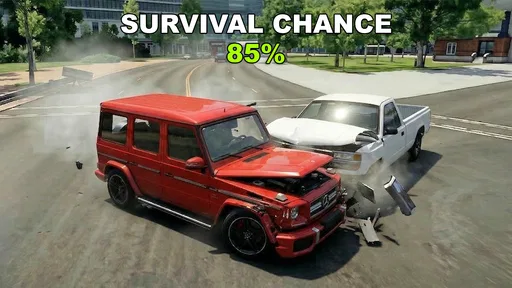
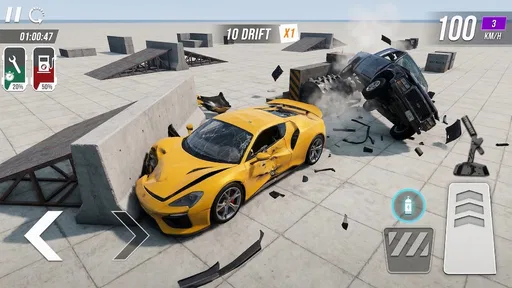
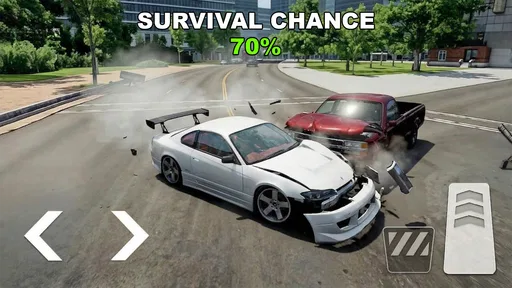
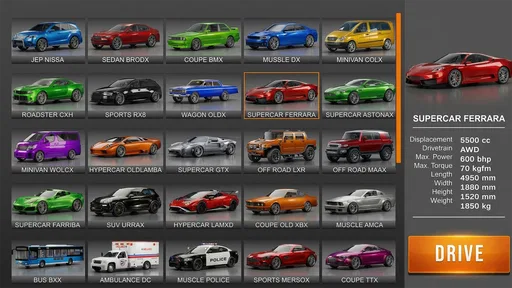
 Analysis by AppCompare
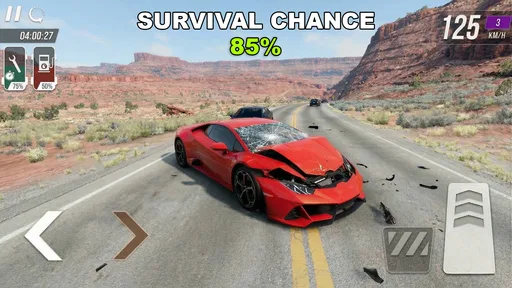
Before I start a run, I decide whether I want to practise keeping the car under control or deliberately test what happens when I push too hard. That small choice makes Car Crash Simulator: Mountain more satisfying for me: it turns a steep drive into a repeatable challenge, rather than a race where I simply hold the accelerator and chase a position. It is a racing game, but its appeal is more about handling a vehicle on demanding terrain and seeing how mistakes play out than about polished competition.
That focus makes the game easy to understand and surprisingly easy to misjudge. A steep road can look like an invitation to go flat out; in practice, treating every stretch that way is a good recipe for losing control. I get more from it when I treat each run as a short driving exercise: read the bend, ease off early, and find out how much speed the car can carry without making the next turn a scramble.
Build a steady baseline before chasing bigger crashes
I find it helps to settle on one repeatable way of approaching a run before experimenting with bigger impacts. Holding your pace and steering habits steady makes it easier to notice which decisions actually change the outcome, rather than mistaking a different line or sudden correction for progress. That gives me a useful baseline, and from there I can look at which control and device settings make the drive feel more predictable.
How I approach a run
My useful starting routine is simple: begin a drive without trying to force a dramatic collision, learn how the car responds, and pay attention to the road ahead. On steep mountain terrain, a turn can demand preparation before it arrives. If I wait until the car is already at the bend to react, I have less room to correct a poor line or reduce speed. The practical lesson is to make small adjustments early rather than dramatic ones late.
That approach also makes the crash aspect more satisfying. A wreck is most interesting when I can connect it to a choice I made—carrying too much speed, misjudging a corner, or failing to settle the vehicle before changing direction. When I drive recklessly from the first second, damage becomes noise rather than feedback. Repeating a section with a more measured pace gives me a better sense of what caused the outcome, even without turning the game into a formal driving lesson.
I would treat each attempt as a little experiment. Keep the same basic approach for a run, then change one habit next time: brake or slow down earlier, steer more gently, or leave more margin around a difficult section. Changing everything at once makes it hard to tell what helped. This is a useful way to get more mileage from the mountain roads without assuming the game has a deep progression system or a special training mode.
Settings to check before settling in
Before committing to a long session, I recommend spending a moment with whatever control and audio options are available on your device. I would not assume that a particular layout or sensitivity setting is ideal for everyone. A control scheme that feels comfortable in a broad curve can feel awkward when a narrow, steep section calls for a quick correction. If the game offers control adjustments, test them on a forgiving stretch first instead of changing them halfway through a run.
Worth Reading Before You Choose

Baby Panda World Brings Quick Play to Modern Phones, but Its Game Library Feels Busy

ESPN’s Live Game View Makes Following Close Games Easier

QuizzLand Review: A Good Fit for Short Trivia Breaks, Not Every Player

Basketball Stars: Multiplayer Is Fast, but Can It Recover When Matches Go Wrong?

WEBTOON Turns Phone Updates Into a Better Reading Routine

Link to Windows Runs on Shared Habits, Not Social Feeds
It is also worth checking whether the current version runs comfortably on your phone or tablet before judging the driving feel. This is a game where visual response and input timing matter: if the experience feels choppy or delayed, it becomes harder to separate your own mistake from an issue with how the game is running. I would close demanding background apps and give the game a clean start if performance seems inconsistent. That is ordinary device housekeeping, not a promise that it will fix every problem.
The game is free to download and includes optional in-app purchases priced at $2.49 per item. I would decide whether those purchases matter to me only after trying the basic driving loop. The core appeal is the act of handling the car and dealing with crashes, so I would not spend money just because a store page offers extras. For a casual player, keeping the first sessions focused on the driving is a sensible way to judge whether the game earns more of their time.
Repeatable habits that make practice useful
A small habit that helps is to choose a clear goal before each attempt. One run can be about staying composed through the bends; another can be about seeing what happens when I take a risky line. That distinction matters because the game’s crash-focused premise can tempt me to treat every drive as a demolition test. If I alternate between controlled driving and deliberate experimentation, I get both kinds of enjoyment without confusing them.
When a crash happens, I try to remember the last decision that could have been different. Was I already going too quickly before the steep section? Did I turn sharply when a gentler correction might have worked? This kind of quick review is more helpful than immediately repeating the same approach at full speed. The soft-body crash concept gives impacts a physical, messy character, but the most useful feedback still comes from noticing the driving choice that led there.
For short play sessions, this makes the game easy to pick up. I can spend a few minutes testing a line, stop after a satisfying run, and return later with a new goal. It is less suited to someone looking for a tightly structured race weekend or a story that unfolds across many hours. Its hook is the repeatable challenge of the road and the consequences of handling it poorly, not a large narrative framework.
Where the mountain driving shines—and where it pushes back
The mountain roads are most rewarding when I treat their steep bends as a test of timing, not an invitation to rush; a controlled approach makes both clean driving and a crash easier to understand. That same narrow focus can become limiting if I want a fresh event or head-to-head competition every time I play. With that trade-off in mind, the next question is whether the game’s particular rhythm suits the way I like to race.
Who will enjoy its particular kind of racing
I would recommend it to players who enjoy vehicle physics, risky roads, and the curiosity of seeing how a car reacts to a bad landing or hard impact. The mountain setting gives ordinary steering decisions a sharper edge: a turn is not just a visual marker but a moment to judge pace and control. If you like testing limits and learning through trial and error, that can make even a short drive entertaining.
It is also a reasonable fit for someone who wants a casual game that can be approached in brief bursts. I can picture opening it while waiting for a friend or taking a short break, choosing one goal, and playing until I have either handled a section cleanly or created a crash worth watching. The best everyday use is not to expect an elaborate career, but to use each session as a compact driving challenge.
The game is published by Moon Star Games Yazilim, has an average rating of 3.6 from around 3,700 ratings, and has passed 1 million installs. Those figures suggest a game with a real audience but mixed reactions, which matches the way I would frame it: a focused idea that will click strongly with some players and feel limited to others. Its age rating is Everyone, and it is free to try, so it is accessible to a broad audience, though the crash-centered play may not be what every family member wants from a racing game.
How it differs from more conventional racers
Compared with a typical circuit racer, this is not the one I would choose when I want close wheel-to-wheel competition, a clear finishing order, or a strong sense of race progression. Its mountain roads and crash emphasis put more weight on individual control than on outpacing a pack. That difference is a strength when I want an unpredictable drive, but a drawback if I need structured races to keep me invested.
Compared with open-world driving games, it also has a more specific identity. I would not come here expecting a broad map to explore or a long list of unrelated activities. The appeal is concentrated: drive on demanding terrain, manage the car, and see what happens when control slips. Players who enjoy wandering through a large world may be happier elsewhere; those who would rather repeat a tricky route and improve their handling may appreciate this narrower scope.
That focus gives the game a useful trade-off. It can get to the point quickly because it does not need an elaborate setup to make a mountain drive tense. At the same time, repeated attempts can feel similar if I am not setting myself a new challenge. I find that choosing a specific driving goal helps, but players who rely on new tracks, unlocks, or a substantial competitive structure to sustain interest should look for a broader alternative.
Limits to keep in mind as you improve
There is a difference between enjoying a spectacular crash and feeling that a driving mistake taught me something. If the vehicle’s response feels unpredictable, repeated failures can become frustrating rather than instructive. I would give the controls a fair trial and avoid assuming that every crash is a precise simulation of real-world handling. The premise points toward dramatic vehicle damage, so I approach it as an arcade-leaning crash experience, not as a tool for learning real driving skills.
Another limitation is that this style rewards patience in a way that may not suit every racing fan. If I want constant speed, clean overtakes, and a steady stream of race objectives, slowing down to study a bend can feel like the game is holding me back. The game is at its best when careful control and the possibility of failure sound enjoyable in their own right. It is a poor match for someone who finds retries irritating or expects every session to offer a fresh event.
Players considering installation should also check their device’s operating-system compatibility: the current version is 3.0.44t and requires Android 10 or later. That practical check is worth doing before troubleshooting controls or performance, especially on an older device. The game’s free entry makes testing straightforward for compatible users, while the optional purchases are a reason to set a personal spending boundary if younger players will use the device.
Making short sessions count
For a quick break, I would avoid beginning with the goal of “getting better at everything.” Pick one observable target, such as entering bends more calmly or making fewer abrupt corrections, and judge the run by that rather than by whether it ends in a crash. This keeps a short session useful even when I do not reach a clean finish. It also helps me decide whether I enjoy the act of driving here, rather than only the spectacle of damage.
If I am sharing the device with someone younger, I would set expectations before handing it over: the game is rated Everyone, but its central attraction is still collisions and wrecks. The optional purchases are another reason to agree on a spending boundary in advance. That simple conversation is more useful than assuming a broad age rating means every part of the experience will suit every player.
My verdict after getting to know its rhythm
Car Crash Simulator: Mountain is most enjoyable when I treat it as a compact test of judgement rather than a conventional racing championship. The satisfying loop is to approach a steep road with a plan, make small corrections, notice where control begins to go, and then decide whether the next run should be cleaner or more reckless. That gives the crashes context and makes repeat attempts feel purposeful.
I would suggest it to someone who likes mountain driving, crash physics, and short sessions built around experimentation. I would steer a fan of deep career modes, expansive exploration, or tightly balanced head-to-head racing toward a different game. For me, the best way to play is to check the controls, pick one goal, and resist the urge to floor it everywhere. The game’s strongest moments come not from crashing constantly, but from feeling that I nearly lost the car—and understanding why I did or did not.
As a free racing game from Moon Star Games Yazilim, it is easy to sample without making a big commitment. Its focused premise is both its main attraction and its main limitation: the mountain routes and destructive driving give it a clear personality, but players who need lots of variety may tire of that loop. If that specific challenge sounds fun, I think it is worth a try; if you mainly want polished competition and a structured race calendar, another kind of racer will suit you better.
Pros
- Mountain roads and varied terrain make crashes feel less repetitive.
- Multiple vehicles offer different handling and collision experiences.
- Destructible environments add visual impact to each crash.
- Simple controls make it easy to start driving and experimenting.
- A sandbox-style setup lets players create their own crash scenarios.
Cons
- Realistic crash physics can feel inconsistent at times.
- Gameplay may become repetitive once the available scenarios are explored.
- Ads may interrupt play
- depending on the version and settings.
- Vehicle and environment variety may be limited without extra content.
- Performance can dip during crashes with many objects on screen.
FAQs for Car Crash Simulator: Mountain
What is Car Crash Simulator: Mountain?
Car Crash Simulator: Mountain is a driving game focused on taking vehicles through mountain environments and watching how they handle collisions, drops, and obstacles. Rather than being a conventional racing game with a strong emphasis on finishing first, it centers on crash-oriented driving and vehicle damage. Its exact modes, cars, and features can vary by version, so check the current store listing before downloading.
Is Car Crash Simulator: Mountain free to download?
The game may be offered as a free download, but that does not necessarily mean every feature is available without payment. Depending on the current release, it may include advertisements, optional in-app purchases, or other monetized content. Review the Google Play or App Store listing for the latest pricing and payment details, and check the purchase settings on your device if children will be playing.
Does Car Crash Simulator: Mountain work offline?
Whether the game can be played without an internet connection depends on its current version and how its features are implemented. Core driving may be available offline in some releases, while ads, online services, or certain content may require a connection. If offline play matters to you, check the app-store description and test the game after installation with your device disconnected from Wi-Fi and mobile data.
Is Car Crash Simulator: Mountain suitable for children?
The game depicts vehicle crashes, which may be unsuitable for children who are sensitive to simulated collisions, even though the action is presented in a game setting. Its age rating and any advertising or in-app purchases can differ between platforms and regions. Parents should review the store’s rating, read its content information, and use device-level purchase and screen-time controls where appropriate.
What should I check before downloading Car Crash Simulator: Mountain?
Check that the listing is for the intended game and developer, then confirm your device meets the stated operating-system and storage requirements. Read recent reviews for reports about performance, controls, crashes, and advertisements, since these can change after updates. Also look over the privacy information and permissions, and make sure you are downloading from Google Play or Apple’s App Store rather than an unfamiliar source.


